Sawstop, Part 1
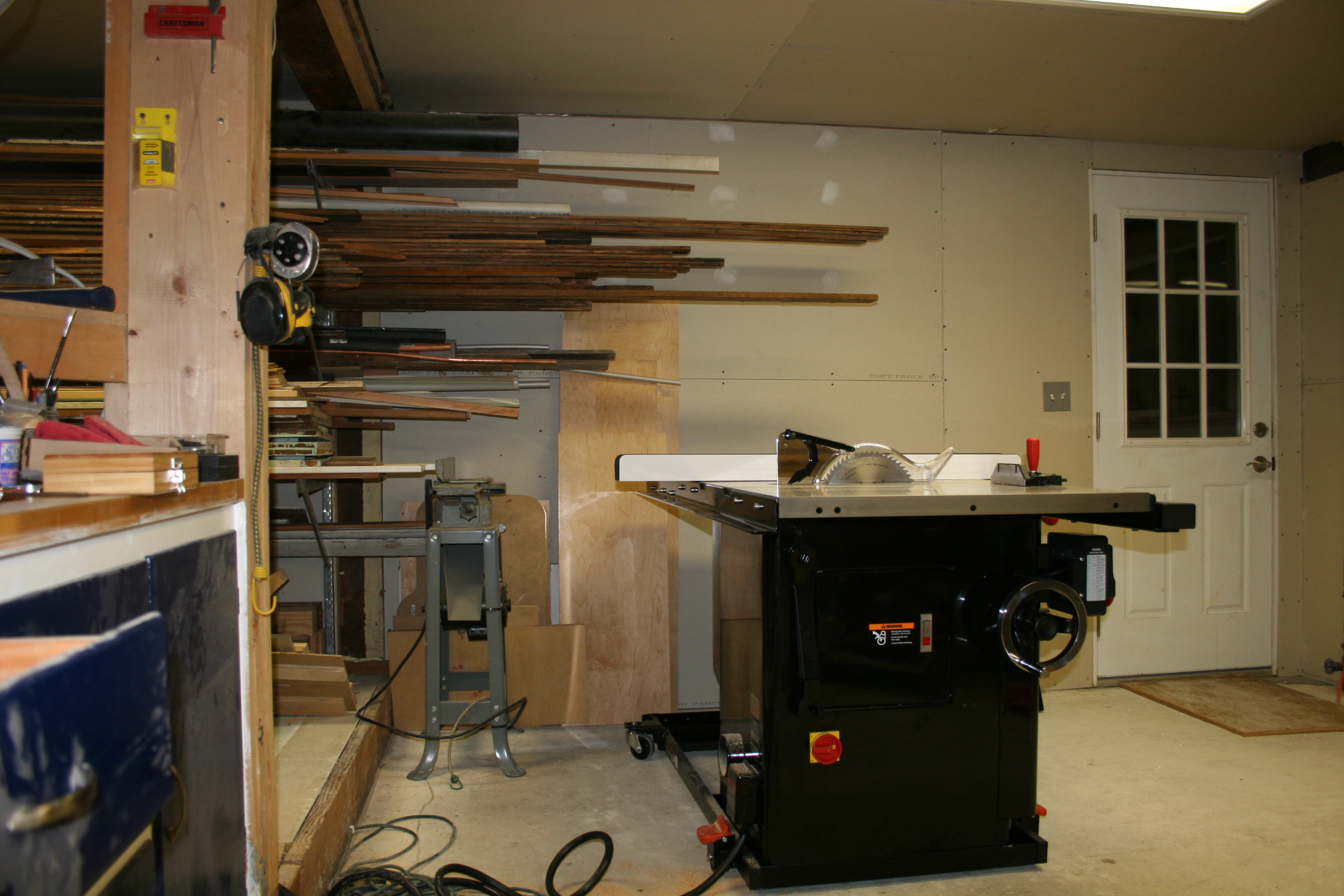
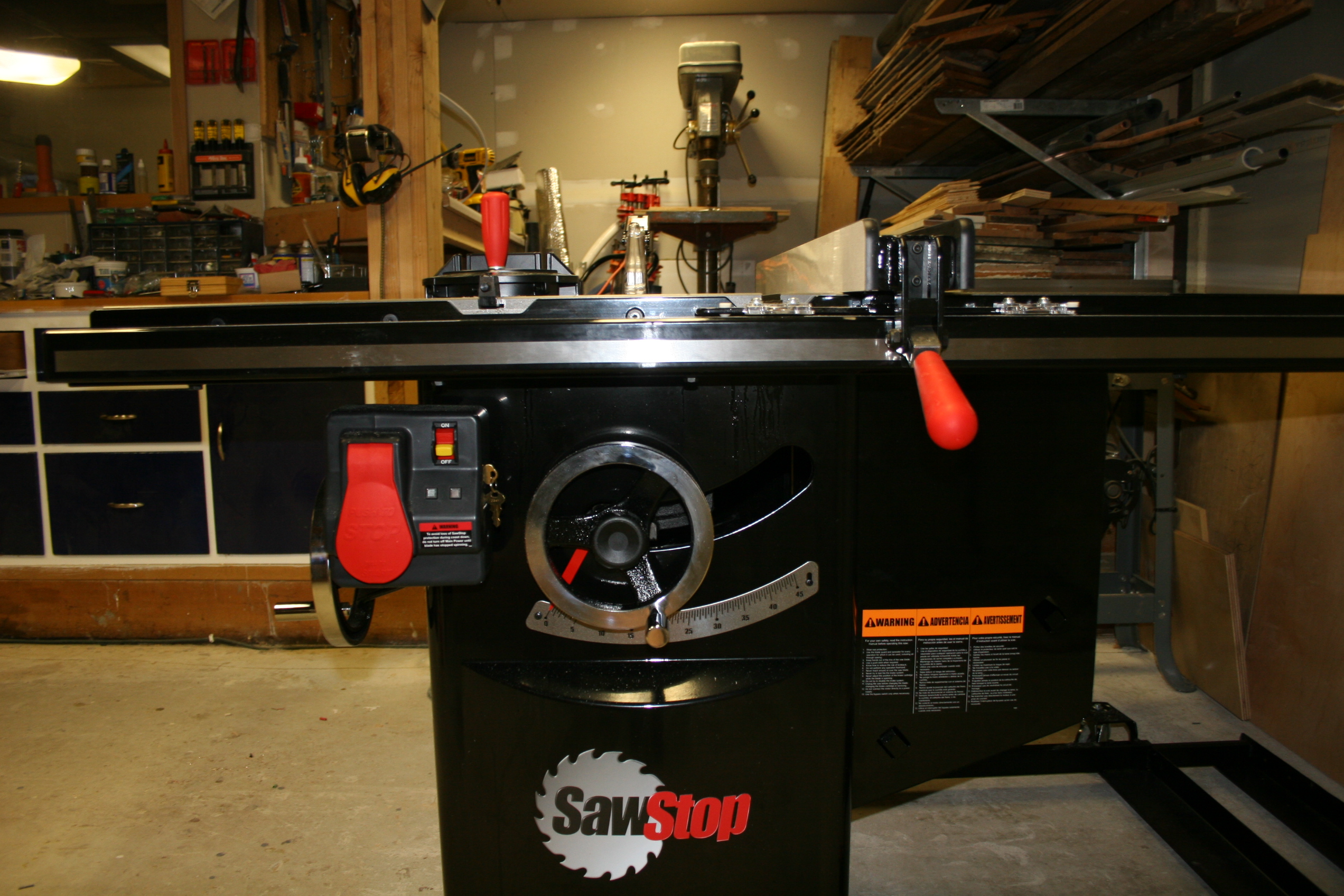
We have a new tool at the Pigeon Point Project! On Friday I went out and bought a Sawstop cabinet saw at the local Woodcraft. I’ve been researching this saw for a couple of years since it came to market; it is broadly considered among woodworkers to be the Cadillac of saws. Oh, and it won’t cut through a hotdog.
The Sawstop has a special sensing mechanism that detects whether flesh comes in contact with the blade. If it does, and the blade is spinning, a block of aluminum is kicked into the blade to stop it. The momentum of this happening drops the blade below the table, out of harms way. This all happens in 3 to 5 milliseconds. Thus, if you’re carelessly pushing some wood through the saw and your finger is in the path of the blade, you’ll likely end up with a band-aid cut rather than a trip to the hospital. I like my fingers and this was a key selling point to me.
The sensing mechanism works by passing a 3V current through the blade. Wood doesn’t conduct electricity; the human body (and hotdogs) do. If and when someone touches the blade their body will absorb some of this electricity. A computer senses any voltage drop in the blade and makes the decision whether to trigger the safety brake. Surprisingly the system is sensitive enough to not trigger when cutting wood that is wet (unless it is 40% saturated and contains copper, perhaps because it is pressure treated lumber that you were storing in your swimming pool).
Here is a video of the Sawstop mechanism at work not cutting hotdogs (which when held by a human operator become an extension of the body and look like a finger to the saw).
In any event, my Sawstop arrived yesterday. My friend Aaron and I picked it up at Woodcraft in his UNIMOG truck – a beastly military surplus vehicle that has a bed set at loading dock height. It turns a lot of heads.

I had intended to post a million pictures of the delivery process. Our house is up on a hill and there are 20 stairs to the shop door from the street. The saw weighs 640lbs, so getting it into the shop was somewhat of a trick. But we didn’t realize until later that the camera had, in fact, no memory card in it. I was very disappointed.
Disappointed mainly because of the spectacle we created. Aaron drove his truck up our sidewalk, which bypassed the first 15 stairs. It isn’t everyday that one sees a large military vehicle in our front yard. Our neighbor Dale even changed out his bathrobe to come take a look-see.
To bypass the next five stairs (bypassing stairs is important when you want to move a 40” square crate that weighs 640lbs) we placed a pair of 4x4 skids on the truck bed, angling them over the stairs to the landing pad that is the short sidewalk leading to the shop door. We greased these skids with Crisco, and SLID the crate off the truck to within 10 feet of the house. At this point we uncrated the saw and manhandled it the rest of the way into the shop. Thank you Aaron, Aaron #2, Jon, and Tomas, for helping out!


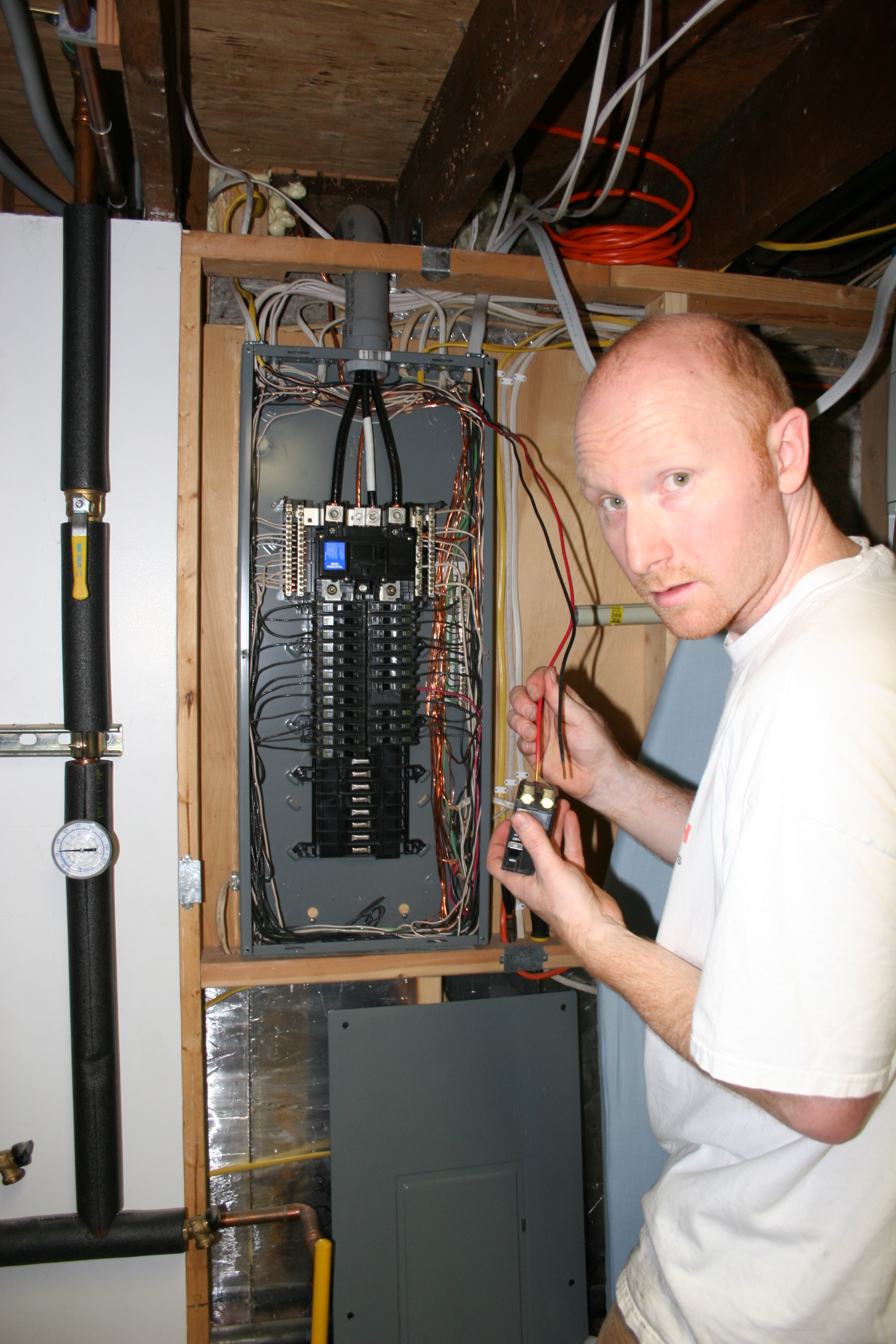
I haven’t used the saw much yet. After we got it in the door I had to assemble it and install a new 240V circuit, and this comprised the rest of my afternoon. And last night we had a dinner party to attend. And today I’ve promised Trissa that we’ll get some paint on the walls.
The first real workout of the saw will be in 2 weeks when my dad arrives to build kitchen cabinets, face frames, doors, and drawers. I’ll post again about the saw when we have a few hours on the motor. Stay tuned.
6 Comments
Greg·October 8, 2006
Ooooh baby!
Greg·October 8, 2006
Wow! I just watched those videos. That is amazing. Are you going to try the hotdog test?
Nick·October 8, 2006
If the saefty mechanism triggers you have to replace a $70 cartridge and likely your blade. So no, I won’t be testing with Hotdogs. Kinda like testing your airbag by driving into a tree.
They were running demos all weekend at the Woodcraft store, so I did see it work in person. Pretty sweet.
Aaron·October 8, 2006
Nice!
I agree it’s like testing your air bag but I’ll admit I’d still be tempted myself. :-) Here’s to hoping that you never have reason to see how well it works.
Jay·January 18, 2007
do you know how it detects a voltage decrease and blow a fuse to initiate the braking of a table saw?
Nick·January 20, 2007
Jay - I’m not an expert on the technology used, but I know that a computer monitors the voltage across the blade and makes the decision to trip the brake. You can read more about the process at the sawstop.com website.